Article
The Unpriced Term in AI Adoption
AI adoption cases count money and labour but miss meaning. Why resistance can protect identity, and what responsible adopters must ask before automating.
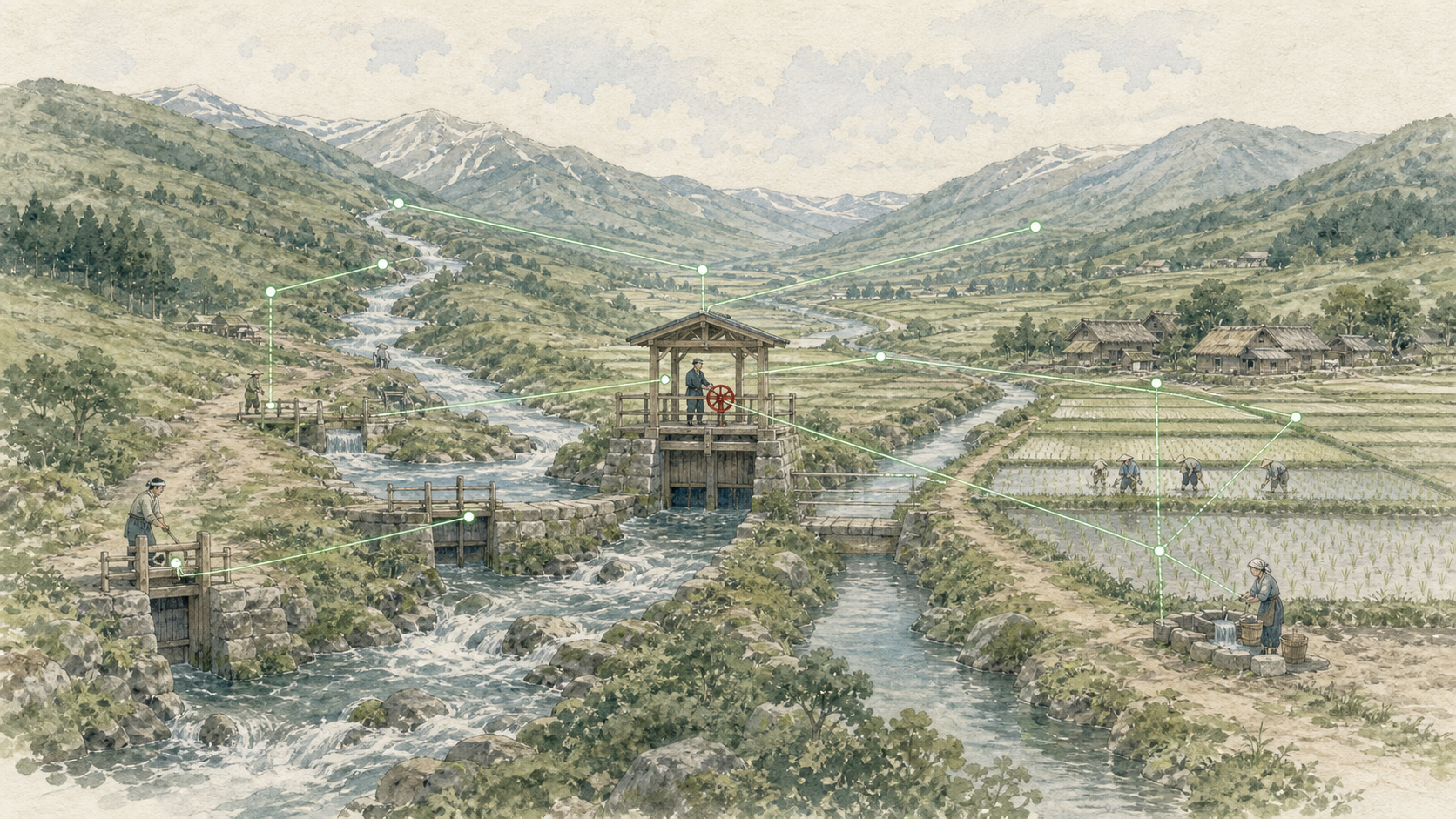
In French class, I read about a merchant who had solved thirst.
In chapter XXIII of Le Petit Prince, he sells pills that remove the need to drink. The experts have calculated the benefit: fifty-three minutes saved each week. The little prince knows exactly what he would do with those minutes. He would walk very slowly toward a fountain.
I disagreed with him when I first read it.
The arithmetic seemed decisive. If the same need could be met in less time, what reasonable person would choose the slower path? It took me years to see the assumption hiding inside the calculation: that drinking and reaching a fountain were the same outcome.
They are not. One is a function. The other may be part of a life.
That difference is the unpriced term in AI adoption.
Same destination, incomplete equation
I have argued that AI should move people up the human hierarchy. In Trace the Downline, I made the case for putting the base of the pyramid on autopilot so that people can spend more of themselves on connection, mastery, contribution, and meaning. I have not changed my position.
But the transition has a cost that most adoption cases leave out.
An adoption proposal usually prices software, labour, implementation, risk, training, and expected return. It may price the loss of a job. It almost never prices what the work means to the person doing it. Meaning is difficult to articulate, impossible to place neatly in a spreadsheet, and often invisible even to the person who draws it from the work.
That does not make it unreal.
I see this often in Japan. A repetitive task that looks like obvious territory for automation can give someone rhythm, competence, social standing, and peace. There is meaning even in the repetition, the mundane, the boredom. There is peace, actually.
My essay What Ikigai Looks Like already makes the positive case: work can carry value that a financial model misses. I do not need to make that case again. The harder question is what happens when someone else decides to remove the work.
When the outcome is not a data output
I met the same problem in a different form while reading Tim Ferriss's The 4-Hour Body. The book is built around experiments, tracking, and measurable changes. I wanted the knowledge. I resisted measuring myself.
The resistance was not rational if the goal was better data. But better data was not my goal. I wanted wellness: an internal state, not a data output. Turning myself into a measurement project risked changing the thing I was trying to improve.
That is also why Eudaimonia distinguishes lived signals from metrics. A metric can describe part of an outcome without containing the outcome.
AI adoption makes the same mistake at organizational scale. The proposal measures the task: minutes, errors, throughput, headcount. The person may be protecting something else: identity.
An asset the company never bought
Identity is assembled slowly. A person may spend decades becoming the one who knows the machine, handles the difficult customer, prepares the room each morning, or performs a craft others recognize. Sometimes that identity began before the job. Sometimes it is inherited across generations.
Then one deployment decision can extinguish it inside a quarter.
The asymmetry matters. The company can remove something it never bought, never carried on its books, and never knew it possessed. Equal pay in a new role may not settle the loss, because the task was only one part of it. Recognition also disappeared: other people no longer see you as the person who does that thing.
This is not merely sentiment. Research on work-related identity loss examines how changes in work roles, relationships, and memberships can disrupt a person's answer to who they are. Not every automation causes that loss. But an adoption model that excludes the possibility is incomplete on its own terms.
That helps explain why some resistance looks disproportionate. The model sees a task worth forty hours a week. The person is defending thirty years.
Resistance is information, not a veto
This argument can go wrong in three ways.
First, it can romanticize drudgery. Some repetitive work is dangerous, humiliating, or genuinely empty. Saying that people find meaning in it has long been a convenient excuse for leaving them in bad conditions.
Second, meaning can become unfalsifiable. If no one can name or measure it, anyone can invoke it to block any change.
Third, the adopter can become paternalistic. Deciding for someone else that their dull task is secretly meaningful is not respect. It is another form of refusing to listen.
The answer to all three is the same: treat resistance as information, not authority.
Do not assume that a worker's objection proves the project is wrong. Do not assume that inability to explain the objection proves there is nothing there. Observe what people protect. Ask what the work gives them beyond its output. Distinguish work they would defend from work they have merely learned to endure. Then design the transition with that evidence in the record.
Meaning is not a veto. It is a cost. Costs can be accepted, reduced, compensated for, or judged necessary. They cannot be responsibly managed when they have been abstracted out of the case.
The adopter owns the missing term
I sell AI adoption services. This argument is therefore self-implicating. It would be easy for someone in my position to describe resistance as a communications problem, a training gap, or rent-seeking by people protecting their jobs.
Sometimes it is. But “the company would benefit” is not a complete answer to someone being asked to sacrifice a part of their identity. It is a tall order to require an employee to become a perfect fiduciary and celebrate their own removal. The objection is not necessarily ill will toward the company, and it is not necessarily greed.
Responsible adoption asks four questions before automating a task:
- What does this work give the person besides its output?
- Which parts are rhythm, status, mastery, community, or identity?
- What will replace those goods if the task disappears?
- Who is named and answerable if the model was incomplete?
That last question places the issue in the Humans Are In Charge series. The person signing the proposal owns its full consequence, not only the portion that fits the ledger. The Judge exists because no model can decide when the record is sufficient. Someone must notice what the calculation excluded.
At a larger scale, enough excluded human cost becomes social pressure, but that is a separate argument.
The practical point is smaller. When resistance appears, do not start by asking how to overcome it. Ask what information has arrived in a form your model does not recognize.
The little prince did not reject efficiency. He rejected an equation that counted the minutes and omitted the fountain.
AI adoption will keep producing better numbers. Our responsibility is to know when the numbers do not contain the outcome.