Article
The Judge
The essential human position in the AI era is the judge: direct the inquiry, develop the record, and remain answerable. Judgment runs on attention, capacity, and memory.
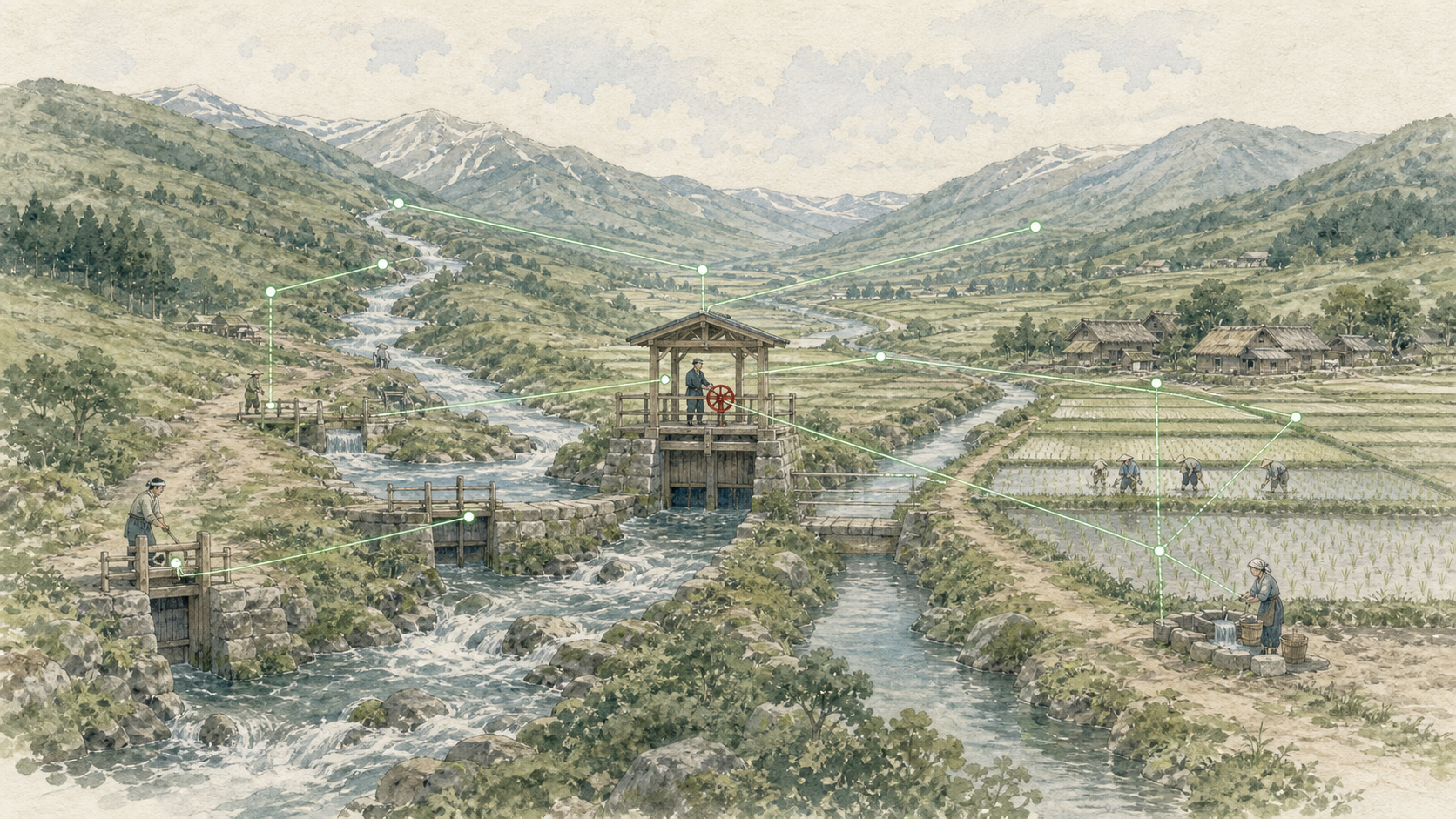
I was once told, by a superior two reporting levels above me, that I had shown poor judgment.
The occasion was a security incident — one I had run, made the calls on, and resolved. His specific complaint was that I hadn't brought in external specialists. Fair enough as a debate: there are real arguments on both sides of that call, and it was mine to make as the person running the operation while it was live. But that debate never happened. I was brought onto a call and informed of the verdict. He had not asked me a single question. He had not asked for my account. He had not looked at the record. He had heard something secondhand and ruled.
The irony hit me while he was still talking, and it was almost funny: in the act of accusing me of bad judgment, he was demonstrating it — by the book. Verdict before hearing. Hearsay for evidence. The accused given no process. And the record unconsulted — which stung most, because the record existed: the relevant risks and vulnerabilities were documented in a risk matrix and had been formally risk-accepted. I was advised, by my immediate superior, not to bring that up. Which told me everything about the court I was standing in: everyone knew the judge didn't judge, and the organization had learned to mitigate around him instead of correcting him.
I said what the moment required. I apologized, accepted accountability, and let the call end. But something had already been decided in me. Until that day, I was headed for a co-founder-level seat there, equity and all. After it, I knew it was not a place I could stay, and I left. I'll add the aftermath with no satisfaction, because it's the point rather than the punchline: I was a key man, nobody had weighed that risk either, and not long after I left, things came apart.
I've carried that afternoon around for years, and here is what it distilled into: the most important human position is not merely the decision maker. It is the judge — and judging is not a verdict. It is a process.
The process: develop the record, then decide
I mean the judge in the civil-law sense. Not a passive umpire waiting for whatever the parties choose to present, but an active participant responsible for developing the record: directing the inquiry, identifying what is missing, testing the explanations, and only then deciding.
My superior on that call held the authority of the bench and performed none of its duties. That's the failure worth naming precisely, because it is everywhere: authority exercised as verdict-issuing, with the inquiry skipped as if it were beneath the office. The office is the inquiry.
And that, increasingly, is the human position in every AI-enabled system: machines now play researcher, clerk, analyst, and advocate — faster every month — but the quality of every answer is bounded by the inquiry it was given, and someone must direct that inquiry. What facts are missing? Whose interests are absent? Which assumption is carrying the conclusion? What would make this wrong? That someone is the judge — the work is what I've elsewhere called tracing the downline. I'll return to what this means for the seat itself; first, the process has a second half.
Judgments must be defensible at the moment they are made, not after the outcome bails them out. The discipline is unglamorous: actively seek to be informed; consider the plausible outcomes one by one and prepare for them; decide once — and only once — that work is done. Readers of Complete Decision Making will recognize the machinery, and what I've just described is really risk management in plain clothes: develop the record, understand the exposure, decide while intervention is still possible.
The aim is not perfect knowledge; no court has that. The aim is a record strong enough that the decision can be explained without pretending the uncertainty wasn't there. My incident call met that bar — the exposure was assessed, documented, and formally accepted before anything happened. The judgment rendered against it did not. One of us had a record. The other had hearsay.
What judgment runs on
Judgment is not a virtue floating free; it runs on faculties, and a useful map for them is the machine on your desk: attention is the CPU, context is the cache, memory is the disk. All three tiers have to function, and each fails in its own way.
Attention — the CPU. A judge must be receptive to the case actually in front of them: undistracted, not composing the verdict while the evidence is still speaking. Energy folds into this — attention is what energy buys, and a depleted bench attends to nothing — but the requirement is attention itself: the processor not busy with other jobs. A ruling issued while the mind is elsewhere is a ruling on a different case.
Capacity — the cache. The law uses "capacity" for whether someone is competent to decide, and the alignment is closer than it first looks: part of competence is simply how much of the case you can hold at once. A judgment formed from a context too small falls for whatever fits in it — the quip, the summary of a summary, the razor that resolves in one line what deserved an afternoon. Those feel like decisiveness; they are its counterfeit. Small context isn't merely underinformed — it is structurally biased toward whoever compressed the story first.
Memory — the disk. Attention and capacity govern the case in front of you; memory is what makes the next case better. Judgment improves only if the system remembers — the question as it stood, the information available at the time, the alternatives weighed, the expected outcomes, and what actually happened. Without that durable record, hindsight quietly rewrites the reasoning — good outcomes become "I knew it all along," bad ones acquire doubts you never actually had — and experience degrades into repetition.
This last requirement is about as well-credentialed as practical advice gets. When investor Michael Mauboussin asked Daniel Kahneman what single practice most improves decision-making, Kahneman's answer was a notebook: keep a decision journal — write down what you decided, why, and what you expect, then review it against reality later. The contemporaneous record is the only honest feedback your judgment will ever get, because memory unaided is a motivated editor. (Farnam Street's treatment, template included, is the best practical starting point.) The principle is load-bearing enough for me that I built a platform on it — DX Complete, my own, disclosed as such: a decision journal at the scale of an operation. It does not replace the judge; it preserves the record so the next inquiry starts with the benefit of the last one.
The stack also names, precisely, what went wrong that afternoon: my superior's ruling failed at every tier. No attention — he asked nothing. A hearsay-sized cache — he held only the compressed version someone handed him. And a disk he never read — the record existed, formally accepted, and went unconsulted. Judgment doesn't fail mysteriously. It fails at a layer.
The seat that cannot be outsourced — or automated
An AI can fill every supporting role in the courtroom. It cannot occupy the bench. "The model chose" is not a decision; it is an empty chair where the judge should have been — the same empty chair as "I heard about it secondhand and ruled." The failure mode is identical whether the inquiry was skipped by a machine's operator or by a human superior: authority exercised without the process that legitimates it.
The bench is also where credit and accountability live. Authority is legitimate when the person exercising it accepts both forward accountability and the credit — response-ability, before the fact, not blame management after it. A judge cannot claim authorship of the good outcomes and become a spectator at the bad ones. The bench is where the chain terminates: someone named, who directed the inquiry, weighed the consequences, and answers for the ruling.
And AI will keep expanding what can be researched, modeled, and executed — which makes that seat more important, not less, because it is the one seat that cannot be automated away. Not for sentimental reasons: because accountability cannot be. A model can hold an opinion; it cannot hold an office.
So someone must direct the inquiry. Someone must decide when the record is sufficient. Someone must weigh what no single calculation can reduce. And someone must remain answerable afterward — win or lose, credit and account.
That person is the judge. Hold the seat properly — or notice, as I once did from the wrong end of a phone call, what it costs an organization when nobody does.